My comments about the new proposed data center in Lansing in the City Pulse.

Doug Bessette, PhD, Associate Professor, Department of Community Sustainability, Michigan State University
My comments about the new proposed data center in Lansing in the City Pulse.
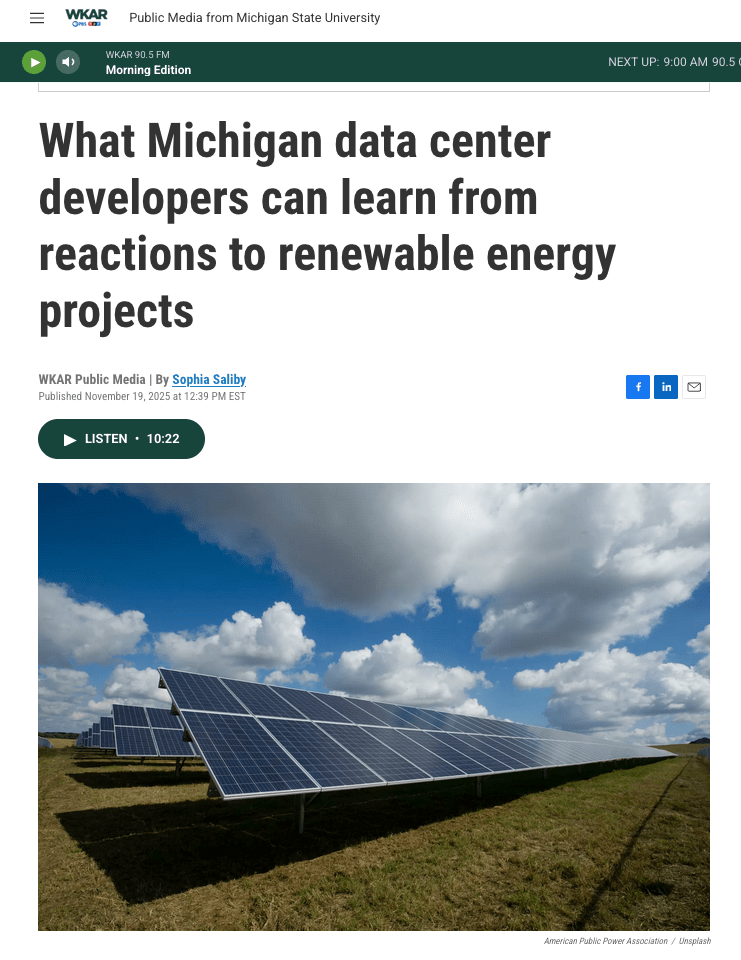
Here me discuss how community engagement and impacts from solar can inform how we should approach data center development on WKAR!
Our paper identifying what community “misengagment” around large-scale solar tends to look like, i.e., single-objective, insular, hostile to opposing perspectives, reliant on confirmation bias or misinformation, and how we created our community-centered solar development (CCSD) approach in response is now available.

Not sure I totally agree with the way this article summarizes our results, but nevertheless here’s our study described in PV Magazine!
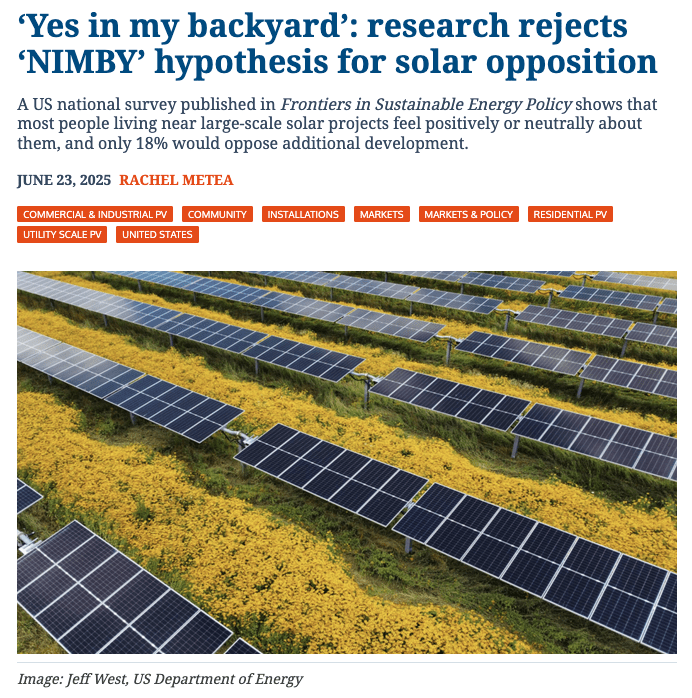
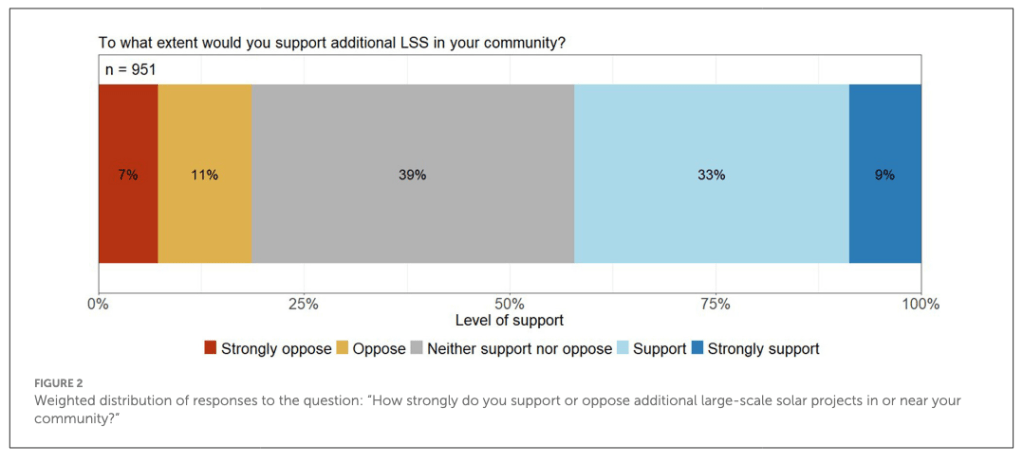
Large-scale solar (LSS) electric capacity is expanding rapidly in the U.S., with over 18 GW added in 2023 and over 40 GW in 2024; high levels of LSS deployment are anticipated to continue in coming years to meet growing electricity demand. Such deployment relies on sustained support from host community members and local governments, but that support is not assured, with community opposition now a leading cause of LSS project delays and cancellations. We conducted a nationally representative, stratified random survey of LSS neighbors (living within 3 miles) in order to better understand factors correlated with sentiments about LSS and levels of support and opposition for additional LSS development among residents with direct lived experience. Overall, we find most LSS neighbors are neutral or supportive of additional LSS in or near their communities. While some objective measures—such as the size of the project nearest the respondent, the respondent’s education level, and whether they have solar on their own home—are important correlates with support, subjective sentiments and perceptions of respondents are much more informative. Perceptions about how LSS helps or hinders community quality of life, landscape aesthetics, residential property values, climate change, and community interests and priorities were especially salient. In addition, respondents’ familiarity with their local project was influential: seeing the project more frequently generally corresponded to lower support for additional LSS. Broadly, we find evidence to reject the NIMBY hypothesis, and, conversely, more evidence to support the relationship between LSS support and community values, identity, sense of place, and protection of that place.
Now Available!!! Below is the May 2025 version of the US Renewable Energy Organized Opposition & Support Database
This dataset, which includes information on over 320 organizations or organized efforts working to either support or oppose renewable energy projects in the United States is a product of the Energy Values Lab in the Department of Community Sustainability at Michigan State University (MSU).
This dataset began as a MSU Undergraduate Honors class project in 2024 and with contributions from multiple students, including both graduate and undergraduate students, continues as a collaborative research project.
The purpose of the database is to provide accessible information to residents, scholars, practitioners, and policy-makers regarding the types of organizations operating online to support or oppose renewable energy development in the US.
The dataset currently covers 32 states. For more on the dataset’s development visit oppositiondb.com
Understanding where and why support for or opposition to large-scale renewable projects exists is key to i) improving siting and permitting processes, ii) enhancing accessibility and reliability of electricity delivery, and iii) facilitating decarbonization and the pursuit of sustainable energy more broadly.
This data is available for any and all uses. Please use the suggested citation below when using or referencing the dataset:
Horowitz, D., Borgess, P., Conroy, J. & D. Bessette (May, 2025). United States Renewable Energy Organized Opposition and Support Group Database. Energy Values Lab, Michigan State University. East Lansing, MI. https://oppositiondb.com/
In addition to the current project team, we would like to acknowledge the work of the following individuals in developing and maintaining the dataset and website: C.Hardaway, J.Martens, A.Moore, V.Unruh., & R.Koyama.
Excited to announce a new paper published in Methodological Innovations, led by CSUS MSc. graduate and Energy Values Lab member Jake White!
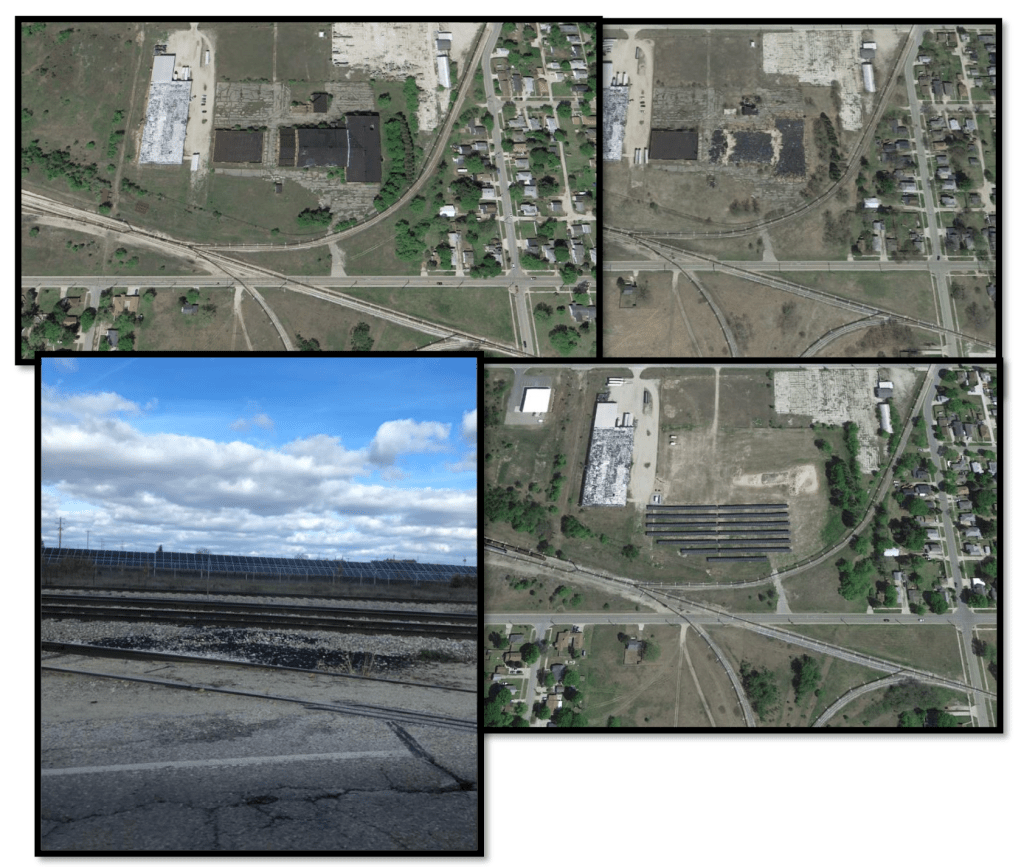
While paper mail-based surveys avoid much of the risk of bots and fraudulent data, they suffer from lower response rates and ever-inflating material and logistical costs. In response, there is a nascent, but growing literature investigating a lower cost, explicitly anonymous, mail-based survey distribution method called Every Door Direct Mail (EDDM).
This study contributes to this growing body of literature by using EDDM to disseminate a sequential mixed-mode census-style survey that meets best use-case recommendations per past research. We make several design alterations to elicit higher response rates including using an outer envelope and cash incentive.
The survey, distributed near large-scale solar developments in three urban Michigan communities (~1554 households), was geographically based, targeted a specific and limited population, and covered the potentially sensitive topic of local solar development, which may have also led to a higher response rate. The survey achieved an overall response rate of 10.2% with 158 complete surveys returned, demonstrating this work’s usefulness, use case, and flexibility.

On Monday the 3rd of February, the CAREsolar workshop, Creating an updated conceptual framework on the socio-ecological impacts and community acceptance of large-scale solar, was held at ETH Zurich with the assistance of the Swiss Research Foundation for Electricity and Mobile Communication (FSM). The workshop brought together 20 experts and key stakeholders from Europe and beyond with the aim of identifying the main challenges and good practices for decision-making around the planning and design of large-scale solar photovoltaic projects. I was honored to be included in this important work.
For an initial report on the workshop, check out Ross Wallace’s summary report.
Supporting Community-Centered Solar Development: A Guide to Hosting Community Conversations About Large-Scale Solar Development
This guidebook helps community leaders, planners, developers, and residents facilitate proactive discussions about large-scale solar (LSS) development. As LSS projects grow rapidly across the U.S., these conversations ensure development aligns with local priorities and values.
The guide provides a practical, eight-step process for planning and hosting respectful, productive discussions about solar’s local impacts—both positive and negative. Developed through the Community-Centered Solar Development project, it reflects real-world insights from pilot conversations led by university Extension professionals across five states.
You’ll find guidance on assessing local solar status, defining objectives, engaging stakeholders, and managing logistics, plus a Resource Library with free tools like slides, templates, and agendas.
Whether your community is preparing for its first solar project or addressing new proposals, this guide equips you to foster understanding, address concerns, and align solar development with your community’s goals.
The CCSD Community Conversations guidebook is also available for download at MSU’s CANR-CSUS’s website: Supporting Community-Centered Solar Development
Props to Karl Hoesch for an excellent paper and the best title I’ve seen so far…

Community engagement in the planning process to build large-scale solar (LSS) projects can win local support and advance procedural justice. However, an understanding of community engagement in current LSS development is lacking.
Using responses from a U.S. nationwide survey (n = 979) of residential neighbors living within 3 miles (4.8 km) of completed LSS projects (i.e. “solar neighbors”) and project details from the U.S. Large-Scale Solar Photovoltaic Database (USPVDB), this study seeks to answer the following questions: How are solar neighbors’ perceptions of community engagement associated with their attitudes toward their LSS projects? How do solar neighbors’ perceptions of community engagement compare to their expectations? And, how do neighbors explain what they perceived about the planning process?
We find that higher perceived engagement is associated with more positive attitudes toward the project, even when controlling for respondents who acted in opposition. Supporters and opponents alike expect more engagement than they perceived and information about projects both before construction and after operation is lacking. Awareness and engagement expectations increase at certain project size and proximity thresholds. However, most neighbors expect the public to offer input during engagement, but not make decisions.
 Energy Values Lab