Partisan winds: Group-level polarization and issue-framing propel attitudes about local wind farms

Political polarization is an obstacle to public support and effective communication for renewable energy projects. Depolarizing messages can be helpful, but it is difficult to determine where to concentrate efforts until social scientists first disentangle the effects of unconscious issue-based and conscious group norm-based polarization processes.

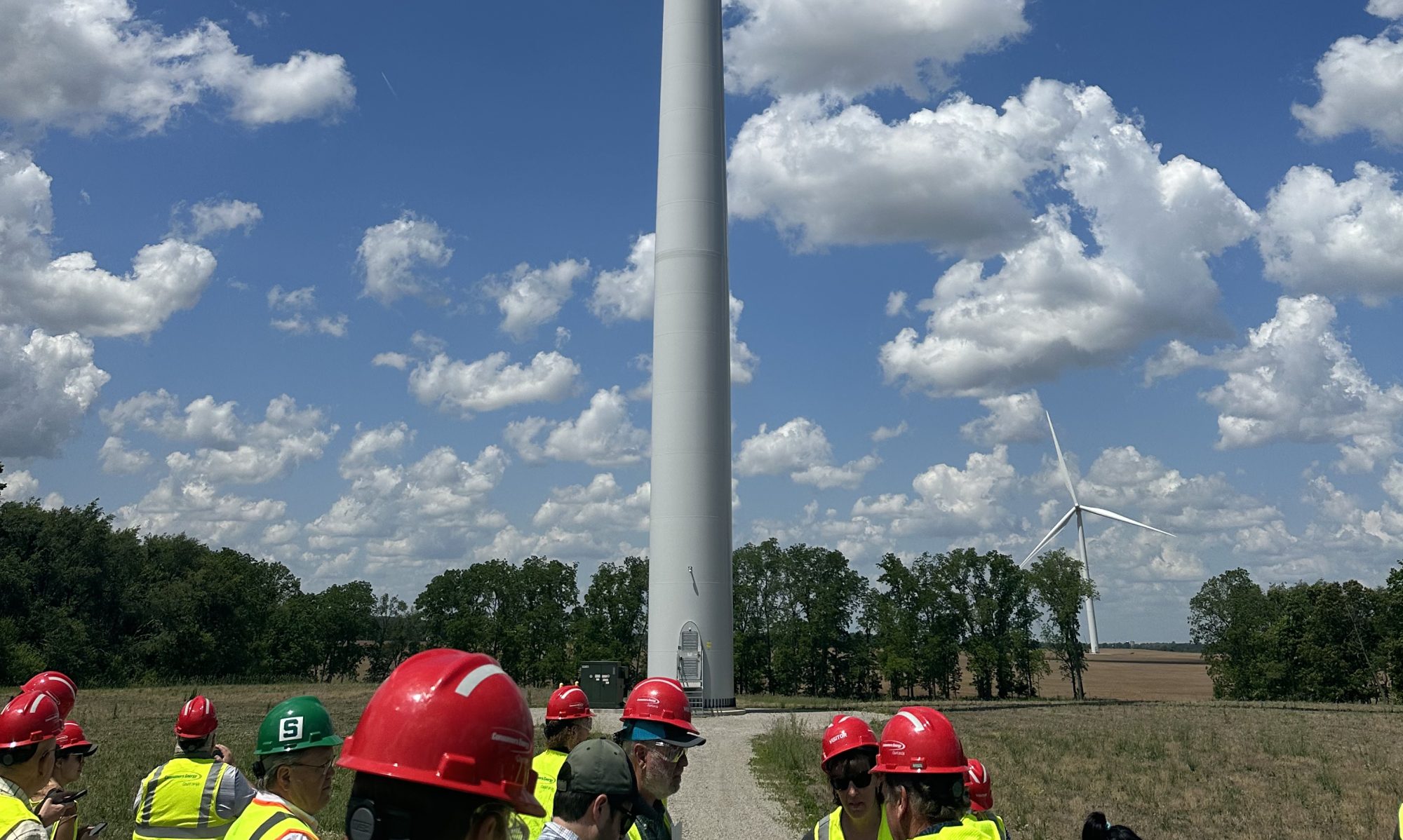
This study investigates the extent to which attitudes towards wind energy development are polarized in the United States, focusing on attitudes about local wind farms. We tested different frames in a survey with 1300 U.S. participants, combining implicit and explicit attitude measures to measure unconscious and conscious attitudes towards nearby wind farms, respectively.

Our findings suggest that explicit attitudes towards wind farms are more polarized than implicit attitudes, emphasizing the role of conscious processes in shaping attitudes. Furthermore, perceptions of within-party support significantly influence explicit attitudes, indicating the importance of group norm-based polarization in this context.

My quick take on solar & heat islands…

Here’s my quick take on large-scale solar and heat islands, having very quickly reviewed the literature below:

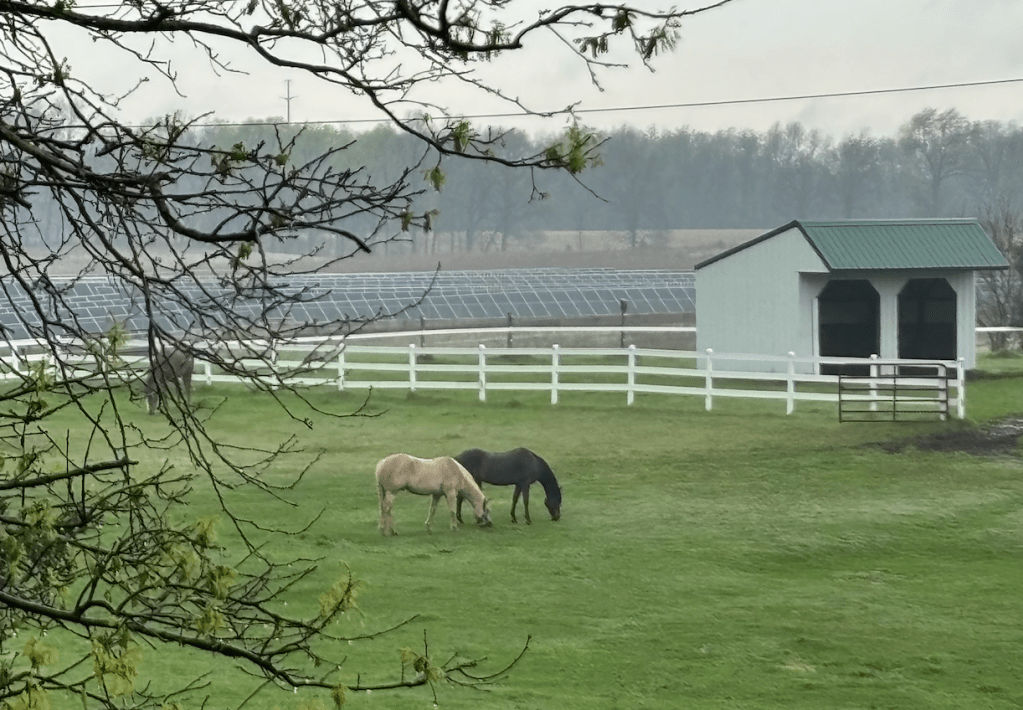
Bottom line: temperatures do rise immediately above and adjacent to solar farms, but decrease under the panels. Vegetation mitigates these effects. The temperature increases also dissipate rapidly as you move away from the panels.

Solar farms do not contribute to global warming, even if there were thousands of them.

Heat island effects are a major–and legitimate–concern of community-members and people (and plants and animals) living near solar farms.

Here’s a bibliography (and links) of studies examining this:

  1. Armstrong, A., Ostle, N. J., & Whitaker, J. (2016). Solar park microclimate and vegetation management effects on grassland carbon cycling. Environmental Research Letters, 11(7), 074016.
  2. Barron-Gafford, G. A., Minor, R. L., Allen, N. A., Cronin, A. D., Brooks, A. E., & Pavao-Zuckerman, M. A. (2016). The Photovoltaic Heat Island Effect: Larger solar power plants increase local temperatures. Scientific Reports, 6(1), 35070. https://doi.org/10.1038/srep35070
  3. Broadbent, A. M., Krayenhoff, E. S., Georgescu, M., & Sailor, D. J. (2019). The Observed Effects of Utility-Scale Photovoltaics on Near-Surface Air Temperature and Energy Balance. Journal of Applied Meteorology and Climatology, 58(5), 989–1006. https://doi.org/10.1175/JAMC-D-18-0271.1
  4. Chang, R., Shen, Y., Luo, Y., Wang, B., Yang, Z., & Guo, P. (2018). Observed surface radiation and temperature impacts from the large-scale deployment of photovoltaics in the barren area of Gonghe, China. Renewable Energy, 118, 131–137. https://doi.org/10.1016/j.renene.2017.11.007
  5. E. Demirezen, T. Ozden, & B. G. Akinoglu. (2018). Impacts of a Photovoltaic Power Plant for Possible Heat Island Effect. 2018 International Conference on Photovoltaic Science and Technologies (PVCon), 1–7. https://doi.org/10.1109/PVCon.2018.8523937
  6. Fthenakis, V., & Yu, Y. (2013). Analysis of the potential for a heat island effect in large solar farms. 3362–3366.
  7. Guoqing, L., Hernandez, R. R., Blackburn, G. A., Davies, G., Hunt, M., Whyatt, J. D., & Armstrong, A. (2021). Ground-mounted photovoltaic solar parks promote land surface cool islands in arid ecosystems. Renewable and Sustainable Energy Transition, 1, 100008. https://doi.org/10.1016/j.rset.2021.100008
  8. Hu, A., Levis, S., Meehl, G. A., Han, W., Washington, W. M., Oleson, K. W., van Ruijven, B. J., He, M., & Strand, W. G. (2016). Impact of solar panels on global climate. Nature Climate Change, 6(3), 290–294. https://doi.org/10.1038/nclimate2843
  9. Jiang, J., Gao, X., Lv, Q., Li, Z., & Li, P. (2021). Observed impacts of utility-scale photovoltaic plant on local air temperature and energy partitioning in the barren areas. Renewable Energy, 174, 157–169. https://doi.org/10.1016/j.renene.2021.03.148
  10. Makaronidou, M. (2020). Assessment on the Local Climate Effects of Solar Photovoltaic Parks [Ph.D., Lancaster University (United Kingdom)]. In PQDT – Global (2460767216). ProQuest Dissertations & Theses Global; ProQuest Dissertations & Theses Global Closed Collection. https://ezproxy.msu.edu/login?url=https://www.proquest.com/dissertations-theses/assessment-on-local-climate-effects-solar/docview/2460767216/se-2?accountid=12598
  11. Masson, V., Bonhomme, M., Salagnac, J.-L., Briottet, X., & Lemonsu, A. (2014). Solar panels reduce both global warming and urban heat island. Frontiers in Environmental Science, 2. https://doi.org/10.3389/fenvs.2014.00014
  12. Nguyen, K. C., Katzfey, J. J., Riedl, J., & Troccoli, A. (2017). Potential impacts of solar arrays on regional climate and on array efficiency. International Journal of Climatology, 37(11), 4053–4064.
  13. Nixon, B. (n.d.). The Potential Micro Climate Impacts of Large-Scale Solar Farms – Implications for Planning and Approvals. https://assets.cleanenergycouncil.org.au/documents/events/event-docs-2019/SIF-2019/Presentations/03-Bronte-Nixon.pdf
  14. Sailor, D. J., Anand, J., & King, R. R. (2021). Photovoltaics in the built environment: A critical review. Energy and Buildings, 253, 111479. https://doi.org/10.1016/j.enbuild.2021.111479
  15. Smith, S. E., Viggiano, B., Ali, N., Silverman, T. J., Obligado, M., Calaf, M., & Cal, R. B. (2022). Increased panel height enhances cooling for photovoltaic solar farms. Applied Energy, 325, 119819. https://doi.org/10.1016/j.apenergy.2022.119819
  16. Wu, W., Yue, S., Zhou, X., Guo, M., Wang, J., Ren, L., & Yuan, B. (2020). Observational Study on the Impact of Large-Scale Photovoltaic Development in Deserts on Local Air Temperature and Humidity. Sustainability, 12(8). https://doi.org/10.3390/su12083403
  17. Xu, Z., Li, Y., Qin, Y., & Bach, E. (2024). A global assessment of the effects of solar farms on albedo, vegetation, and land surface temperature using remote sensing. Solar Energy, 268, 112198. https://doi.org/10.1016/j.solener.2023.112198
  18. Yang, L., Gao, X., Lv, F., Hui, X., Ma, L., & Hou, X. (2017). Study on the local climatic effects of large photovoltaic solar farms in desert areas. Solar Energy, 144, 244–253.
  19. Zhang, X., & Xu, M. (2020). Assessing the Effects of Photovoltaic Powerplants on Surface Temperature Using Remote Sensing Techniques. Remote Sensing, 12(11). https://doi.org/10.3390/rs12111825

Electricity access empowers women through expansion of economic, physical, and mental spaces in Zambia

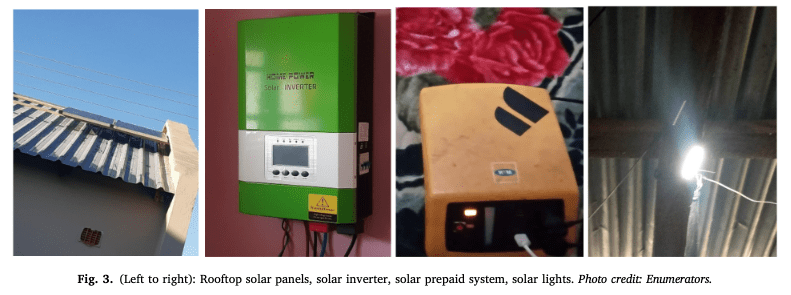
Expanding electricity access (Sustainable Development Goal (SDG) 7) and empowering women (SDG 5) are closely linked. Most studies quantifying the benefits of the former for women focus on their economic empowerment; however, if and how such access results in women’s empowerment is best understood by examining the cultural context, norms, and gender roles in which that access occurs.

In this study, we delve deeper into the multi-faceted and context-specific concept of women’s empowerment via 28 semi-structured interviews with Zambian women. We include households with and without electricity to understand women’s subjective meaning of empowerment and how access to electricity may (dis) empower them. We analyze their responses using Deshmukh-Ranadive’s (2005) Spaces approach to empowerment which categorizes an individual’s spaces into physical, economic, political, socio-cultural, and mental space.

We find that electricity access empowers women by expanding their economic and physical, along with mental, space. This occurs via paid opportunities outside the home using electrical appliances and women reporting greater economic independence, camaraderie, self-reliance, and agency as a result. Additionally, by asking women to define what empowerment means to them, we not only bolster the claim that electricity access empowers women both economically and socially, but also ensure future programs account for empowerment explicitly in their plans.

Energy Values Lab at MSU and partners selected for $2.5 million US DOE Solar Energy Technology Office award to study social science of siting!

The Energy Values Lab in the Department of Community Sustainability, led by Doug Bessette, at Michigan State University has been selected for a $2,500,000 award by the U.S. Department of Energy Solar Energy Technologies Office! This interdisciplinary and multi-institution project aims to answer a single comprehensive research question: how can we speed large-scale solar permitting processes, while also reducing community burdens, improving community outcomes, and improving residents’ perceptions of solar? Put simply, how can we develop solar both fast and fair?

We expect this work to generate actionable insights to improve large-scale solar siting processes and outcomes for host communities and the solar industry, speed solar deployment, and ensure that all Americans benefit from the clean energy transition. Learn more about the project here.

Another unavoidable solar tradeoff: Local Environmental Benefit vs Economic Loss

One of the chief concerns of rural residents faced with large-scale solar (LSS) proposals are those projects’ impact to the local agricultural economy.

While the construction of LSS creates temporary jobs and economic activity at local businesses, e.g., hotels, gas stations, restaurants and hardware stores, once the project is complete and operational, the full-time equivalents (FTEs) generated by LSS are minimal.

One project-operator told me 1 FTE could manage about 100 MWs of solar.

This doesn’t include landscaper contracts, which can be considerable, but also may be entered into by companies that are ex-local, i.e., “not from around here.” Typically the bigger the project, the less likely your local landscaping company is getting that contract. It’s just easier for operators to sign huge contracts with firms that can maintain hundreds of acres across a region.

Another concern is that tenant farmers can’t pay landowners what solar developers can pay for access to land. Farmers can pay a few hundred dollars per acre, while developers often pay $1000 (or more) per acre. This can drive local farmers out of business.

While much of what you read is about how the overall impact to state or national farmland of LSS may be small (1-2% of farmland lost), if you’re the farmer losing access to land you’ve farmed for decades, that news isn’t encouraging–or even relevant.

But what this recent article and argument made by Jon Baker, the Doral Renewables VP for Development, makes clear, is that there is another unavoidable tradeoff.

Baker touts the environmental benefit of planting ground-cover under and around panels and the lack of production agriculture avoiding pesticide, herbicide and fertilizer use.

To be sure, these are huge, and legitimate, environmental benefits. If you’re a neighbor of that project, your local water quality may improve. Your local ecosystem may benefit from the lack of monoculture.

However, the dollars spent on those supplements are also lost. So that environmental benefit also comes with a significant economic loss. Baker argues his 1300 MW project will avoid 1000 tons of fertilizer annually and tens of thousands of gallons of herbicides and pesticides. Some producer and distributor, perhaps a local one, is losing those contracts.

That’s a huge benefit for the local environment. But also a significant loss to the local ag economy.

And here we see, that there is no silver bullet, there is no “win-win.” There’s a winner, and there’s a loser. And it only depends on what side you’re on to determine which is which.

New Study! -Energy justice outcomes of a low-income community solar project in Michigan

This study, published in Energy Research & Social Science, and led by Karl Hoesch at UofM, explores one community solar project in a rural community in the upper peninsula of the U.S. state of Michigan. The project contained a carve-out for Low-Middle Income (LMI) households identified through participation in the National Weatherization Program (WAP).

Through nine semi-structured interviews, 44 phone surveys, and analysis of two years of monthly energy consumption and bill data we sought to understand three energy justice impacts on the targeted community and participants’ perceptions of the program and its processes. We show that positive distributional, procedural, and recognition justice outcomes from community solar are achievable in a context without supportive legislation, under certain conditions. These results may have implications for expanding community solar to LMI households in small towns both in the United States and abroad.

Removal of topsoil and runoff associated with LSS

There was a provocative story in Reuters this morning about concerns over the removal of topsoil, increased soil erosion, and increased sediment runoff resulting from large-scale solar development. Anybody that’s witnessed construction of a LSS project understands the significant earth-moving and grading that accompany installation of the panels. There is undoubtedly an impact to the land. Does that impact lessen over time and with proper groundcover, the planting of pollinator species in particular, sure, but let’s stop arguing there’s no impact to prime farmland. Especially since the number of LSS projects that have been decommissioned and returned to ag production stands at, well, zero.

In MSU Today: New survey from MSU and others finds positive perceptions of solar projects

This survey marks the first nationally representative study of large scale solar neighbors

As solar energy development accelerates, how do Americans actually feel about those large scale solar, or LSS, farms they see along the highway or near their neighborhood? A new survey has found that for residents living within three miles of a large-scale solar development, positive attitudes outnumbered negative attitudes by almost a 3-to-1 margin.

Researchers at Lawrence Berkeley National Laboratory, Michigan State University and the University of Michigan surveyed almost 1,000 residents living near solar projects — the first time a representative survey of this kind has been deployed nationally. More here.

You can’t have your cheap solar and make it too

Today’s NY Times article examining China’s efforts to flood the market with cheap solar panels identifies an enduring conflict in the Biden clean-energy agenda: you can’t have both cheap panels and panels made in the US. And for Biden, one without the other is a loss.

Cheap panels mean a speedy transition, more solar farms, more clean electricity, more progress toward his net-zero goals. But cheap panels are made in China. So, more solar development necessarily means more investment in the Chinese solar supply chain, and necessarily less invested in onshoring that supply–bye bye CubicPV!

However, if Biden goes all out, incentivizing, and (hopefully) ultimately relying on, domestically manufactured solar, then the price will inevitably increase, meaning a slower transition, less development, less progress. Slower progress means less wins, which for Biden is essentially the same thing as a loss.

This problem isn’t going away. Navigating it will be difficult, if not impossible. And what’s so frustrating is that this problem is essentially the result of our giving up our competitive advantage so long ago. Not just on solar, but all things manufactured.